
anatomy of a ring
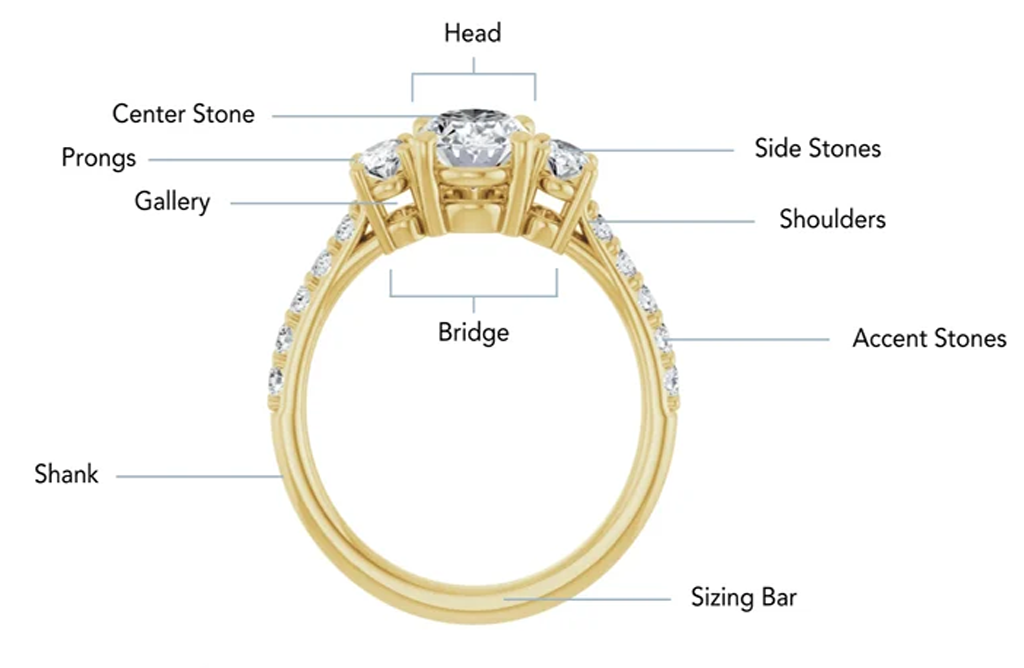
Anatomy of a ring. The centre stone is the largest diamond or gemstone that sits directly in the centre of the setting. It is the star of the show and one of the most highly considered parts of the engagement ring. While the most popular shape for a centre stone is round, fancy diamond shapes including oval, pear, emerald, cushion, marquise, and radiant cut diamonds are becoming an increasingly popular choice. Side and accent stones are the stones that flank the sides of the center gem and are attached to the shoulders or the shank of the setting. Side stones can either be made up of diamonds or gemstones and can come in any range of fancy shapes for a truly unique look. Accent stones can either span just a portion of the ring or fully encircle the entire band in an “eternity” style. SettingEngagement ring settings include every part of the engagement ring but the centre stone and refer to how stones are set or mounted on to the band. The setting’s purpose is to support and highlight the beauty of the main centre stone. The style of your setting can dramatically affect the overall final look, performance, and maintenance of your engagement ring. Settings are often broken down into distinctive style categories. Below are six of the most common:
Solitaire: Solitaire engagement ring settings are classic and eternally popular. They feature an all-metal band and a singular centre stone, placing all the focus on the centre gem. Solitaire settings can easily be made more stylised by pairing them with a diamond-accented wedding band.
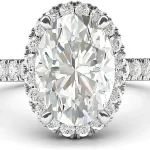
Halo: Halo engagement ring settings feature a singular enter stone that is completely encircled by smaller gemstones for a dazzling look. Halo engagement ring settings often make the centre diamond appear larger in size and are ideal for someone who is looking for show stopping sparkle.
Three Stone: Three stone engagement ring settings are highly sought after for their added sparkle and symbolic meaning. This setting features a main centre gem with two smaller accent diamonds on each side. The three stones represent the journey a couple takes together – past, present, and future.
Hidden Accent: Engagement ring settings featuring hidden diamond accents are becoming an increasingly popular choice. The accents can be found hidden in a halo under the centre stone, diamond accented bridge, or a diamond adorned gallery. Hidden accent engagement ring settings sparkle from every angle for a truly dazzling effect.
Bezel: Bezel engagement ring settings are the most secure as the outer edge of the centre stone is completely enclosed with a layer of precious metal. This securely holds the centre stone in place and creates a contemporary look.
Pavé: Engagement ring settings feature a band that is mounted with lots of small diamonds that are set close together for a diamond encrusted look. This setting is perfect for the bride looking for an extra pop of subtle sparkle.
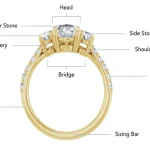
The head is located at the top of the engagement ring and refers to the part of the engagement ring that holds up the centre stone. The head includes the prongs and gallery.
Prongs are the small metal tips that hold the centre stone in place. They are either claw prongs which have pointed ends, bead prongs which are rounded, or sometimes V-shaped depending on your setting and centre stone shape.Engagement ring settings most often feature four or six prongs, although some fancy diamond shapes such as a pear may require an odd number.
The gallery is part of the head and refers to the detail on the underside of the ring centre stone that you can see from the side profile. The engagement ring gallery is a place to feature intricate design details such as hidden diamond accents that add to the unique beauty of the ring.
The engagement ring bridge is the part that rests on top of the finger and can be found under the head. The bridge increases support for the head and is often a place that includes added design details such as diamond accents or a milgrain pattern.
The engagement ring shoulder refers to the top sides of the engagement ring that form the beginning of the shank. The shank can be twisted, flat, curved, or included other unique design details.
The engagement ring shank, commonly referred to as the band, is the metal part of the engagement ring that encircles your finger. The shank starts at the end of the shoulders and is typically all-metal, but can feature diamond accents that extend around the entirety of the shank – which is called an eternity band. The shank is an important design element affecting both the appearance of the ring and how it feels to the wearer.
The sizing area is the bottom portion of the shank where the ring can be cut and sized to your exact fit. Sizing an engagement ring consists of cutting the sizing area and either adding or removing metal to make the ring larger or smaller.
A cluster ring features many small diamonds or gemstones clustered together instead of a single centre stone. The gemstones are often arranged in the shape of a flower.
Five-stone ring designs resemble the half-eternity ring and thus share the same symbolic meaning of eternal love and commitment.
An eternity ring features a full circle of diamonds or gemstones with no centre stone. If the diamonds don’t completely encircle the finger, the ring is described as a “semi-eternity” band, or “half-eternity”.
A smooth and secure setting for diamond bands, channel settings use parallel metal lips to hold the stones inside a recess in the band. The lips are made narrower than the stones in a channel head, which helps to keep the gemstones in place.
Invisible Setting As the name implies, this setting does not reveal how the gemstones are held in place. No metal can be seen overlapping the gemstones, creating a smooth, seamless surface. The secret to this setting lies in a unique stone-cutting technique. Grooves are cut into the sides of each gemstone to lock them onto a hidden metal rail, with the pressure applied from the outer edges keeping them in place. Though stunning, this type of setting is arguably the least secure of all.