Are lab diamonds real? Lab Grown Diamonds have grown in popularity over the past several years and are a viable choice when shopping for a diamond engagement ring. However, the idea might be met with some skepticism. A diamond that is considered ‘synthetic’ and professionally grown in a laboratory may not line up with your notions of romance. But take a few moments to familiarise yourself with Lab Grown Diamonds. You might find you are pleasantly surprised by this option. Brenda Harwick, the manager of on campus and lab gemmology instruction for GIA, the Gemological Institute ofAmerica, suggests, “When you’re making an investment in something as precious as this, you should ask for a grading report.”
The idea of a Natural Diamond is comfortable. It’s how people have been doing things for centuries and there is an attractive passion and dependability in choosing a Natural Diamond. Here’s what you should consider when deciding between lab created diamonds vs natural stones.
What is a Lab Created Diamond?
A lab grown diamond is one that has been manufactured in a controlled laboratory environment. Using the popular methods of Chemical Vapour Deposition (CVD) or High-Pressure High Temperature (HPHT), scientists can now create diamonds that optically look like earth-mined diamonds, contain the same chemical and physical attributes and even receive certification through the Gemological Institute of America (GIA) and InternationalGemological Institute (IGI)
Are Lab Diamonds Real?
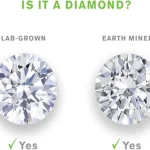
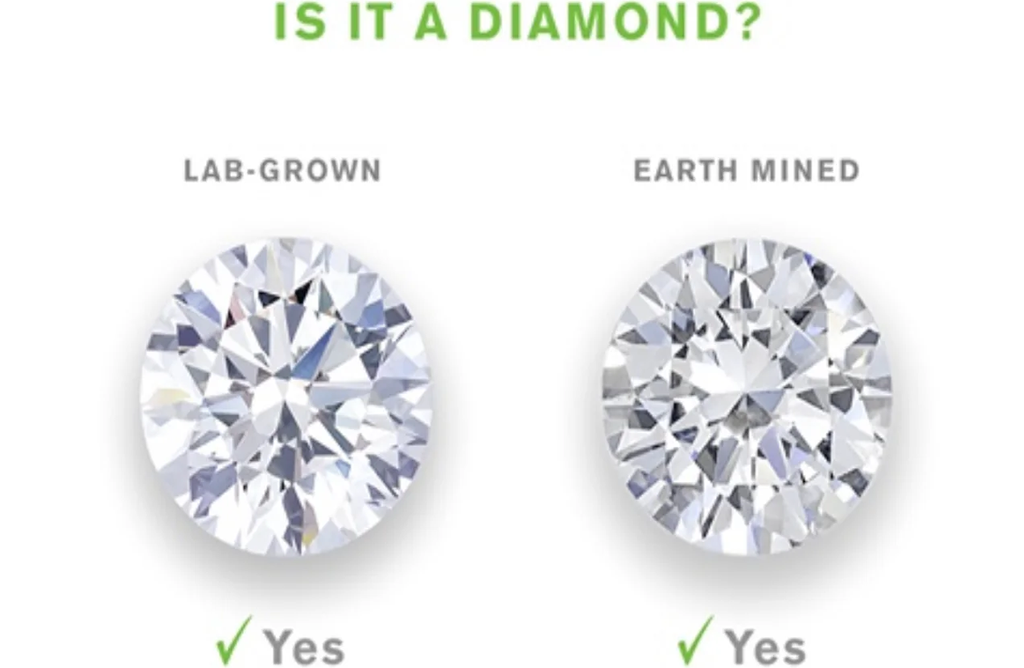
Oh yes. Lab Grown Diamonds are just as real as diamonds that are mined from the earth. They have shape, size, colour and clarity grades, just likeNatural Diamonds. Both Natural and Lab Grown Diamonds have the same physical and chemical properties and both come with diamond certifications.
Lab Diamonds vs. Natural – What do the Experts Say?
Visually, Natural Diamonds and Lab Grown Diamonds are exactly the same with the same hardness level and durability. In 2018 the Federal TradeCommission recognised Lab Diamonds as real. But do lab created diamonds test as real? Yes. In fact, The Gemological Institute of America, (GIA) “has been grading laboratory-grown diamonds since 2007. Beginning July 1, 2019,GIA Laboratory-Grown Diamond Reports and identification reports no longer use the term “synthetic.” The GIA Laboratory-Grown Diamond Report includes the standard GIA colour, clarity and cut grading scales for reference purposes.”
Lab Diamonds vs. “Real” Diamonds -What are the Differences?
The differences between Natural Diamonds and Lab Grown Diamonds cannot be seen with the naked eye. Natural Diamonds have tiny amounts of nitrogen, while Lab Grown Diamonds have no nitrogen. This is actually one of the signifiers gemologists use to identify if a diamond is lab grown or natural. Natural diamonds are created under the pressure of earth’s crust over millions of years, then they are mined, cut and polished. A Lab Grown Diamond is placed through the same circumstances, only in a lab setting. In fact, the process used to create a Lab Grown Diamond cuts down the grow time significantly, from millions of years to a couple of months. Then, the LabDiamond is also cut and polished.
Pros of Buying a Lab Grown Diamond
Lab Grown Diamonds are approximately 30-50% less than a Natural Diamond, which means you can purchase a significantly larger diamond and truthfully say it is a diamond. The difference cannot be detected with the naked eye when comparing a Lab Grown Diamond and a Natural Diamond of equal characteristics of the 4 C’s. Lab Grown Diamonds have the same physical and chemical properties as Natural Diamonds so they will be just as dazzling. AreLab Grown Diamonds more ethical? Some think Lab Grown Diamonds are more ethical because there is no mining involved. However, The KimberleyProcess put in place in 2003, has successfully prevented the flow of conflict diamonds. If your emphasis is not focused primarily on the resale value of the diamond, a Lab Grown Diamond is a good alternative to purchasing a more expensive Natural Diamond. To put it simply, you’ll get more bang for your buck.